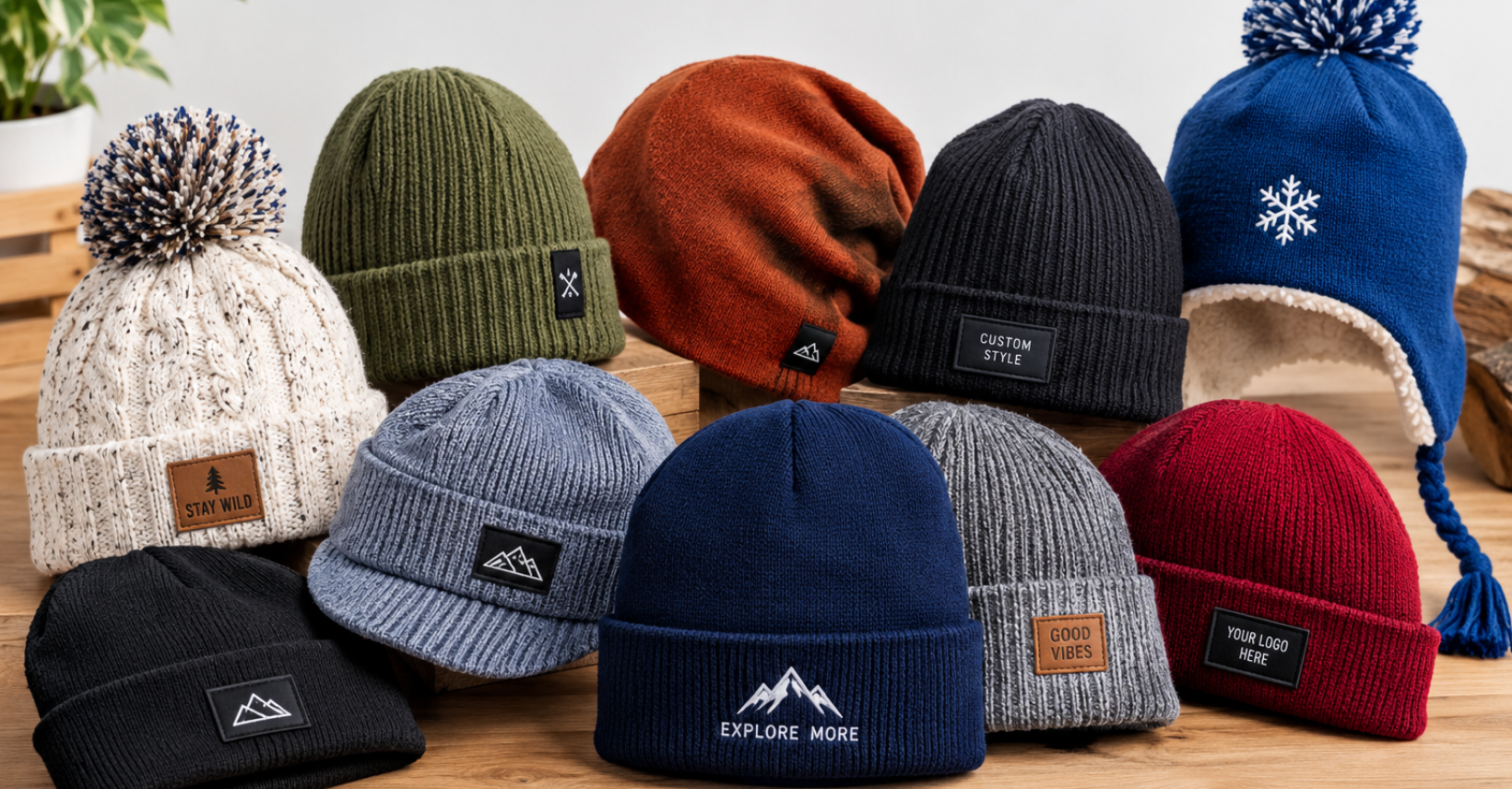
Custom beanies have become an essential accessory for fashion brands, businesses, sports teams, outdoor enthusiasts, and anyone looking to combine personal style with everyday comfort. More than just a winter accessory, a well-designed beanie can represent a brand, promote a business, complement an outfit, or create a memorable personalised gift. With different shapes, fabrics, colours, and customisation techniques available, finding the right beanie is easier when you understand the options.
Whether you are developing a clothing collection, planning promotional merchandise, ordering branded headwear for your team, or creating personalised gifts, choosing the right style is an important first step. The shape of a beanie influences its appearance, while the material determines its softness, warmth, stretch, and durability. Customisation options such as embroidery, woven labels, and decorative patches can then transform a simple knitted hat into a distinctive accessory.
At Custom Beanie Makers, understanding these details can help you make more informed decisions when planning your next headwear project. From classic cuffed beanies to modern fisherman styles, there are numerous possibilities for creating headwear that reflects your identity.
In this complete guide, we explore the most popular types of custom beanies, the materials used to manufacture them, different logo application methods, and practical design tips to help you choose the ideal option for your requirements.
What Are Custom Beanies?
Custom beanies are knitted or fabric headwear products designed with personalised colours, logos, graphics, labels, or other decorative details. Unlike standard ready-made hats, custom beanies can be developed to match a particular brand identity, event theme, uniform, or personal preference.
Businesses frequently choose custom beanies as promotional merchandise because they combine practical use with visible branding. Fashion labels use them to expand their winter collections, while sports clubs and organisations can create coordinated accessories for members and supporters.
Custom beanies are also popular among individuals who want personalised gifts for birthdays, holidays, celebrations, and special occasions.
Depending on the design, customisation may include embroidered logos, woven labels, leather-style patches, personalised text, contrasting cuffs, or custom colour combinations. Some manufacturers also offer specialised knitting techniques that incorporate patterns or branding directly into the fabric.
The result is a versatile accessory that can be practical, fashionable, promotional, or all three.
1. Cuffed Beanies: The Classic Everyday Style
Cuffed beanies are among the most recognisable and versatile types of custom beanies. They feature a folded band around the lower edge, creating a structured appearance and an additional layer of knitted material around the forehead and ears.
The folded cuff provides a convenient surface for displaying a company logo, embroidered design, or branded patch. This makes cuffed beanies particularly suitable for businesses, fashion labels, promotional campaigns, and team uniforms.
Why Choose Cuffed Beanies?
One of the main advantages of cuffed beanies is their adaptable design. They work with casual clothing, outdoor apparel, streetwear, and winter uniforms. Depending on the knit and fit, they can look traditional, sporty, minimalist, or premium.
The cuff also offers a relatively stable branding area. Simple logos, initials, and short text can be positioned neatly on the front without competing with the rest of the design.
Popular colour choices include black, navy, grey, cream, and burgundy. However, brighter colours can work well for sports teams, school merchandise, and brands that want their headwear to stand out.
Best Uses for Custom Cuffed Beanies
Cuffed beanies are suitable for:
- Corporate promotional merchandise.
- Branded workwear and employee gifts.
- Fashion and streetwear collections.
- Sports clubs and team accessories.
- Winter events and seasonal campaigns.
- Personalised gifts for friends and family.
For a first custom beanie order, a cuffed design is a practical starting point because it combines a familiar shape with a useful area for branding.
2. Slouchy Beanies: Relaxed Style and Modern Fashion
Slouchy beanies feature a longer crown that extends beyond the top of the head, creating a relaxed, slightly loose appearance. Unlike closely fitted styles, they are designed to drape naturally at the back.
This shape has become popular in casual fashion and streetwear because it adds texture and personality to an outfit. Slouchy beanies are also useful for brands that want a more relaxed alternative to traditional winter headwear.
Design Possibilities for Slouchy Beanies
The longer silhouette creates opportunities for experimenting with different knit textures, colours, and decorative details.
Neutral shades such as charcoal, beige, olive, and black create understated designs. Alternatively, vibrant colours and contrasting yarns can give a beanie a more expressive appearance.
For custom branding, smaller embroidered logos, woven labels, and side tags can work particularly well. Large designs may become distorted when the fabric naturally folds or gathers, so logo placement should be considered carefully.
Who Should Choose Slouchy Beanies?
Slouchy beanies are especially suitable for:
- Independent fashion brands.
- Streetwear collections.
- Lifestyle merchandise.
- Creative businesses.
- Casual everyday accessories.
- Personalised fashion gifts.
If your brand focuses on relaxed styling and contemporary fashion, a slouchy beanie can help communicate that identity without relying on oversized graphics.
3. Fisherman Beanies: Minimalist and Contemporary
Fisherman beanies are characterised by their short, compact shape and relatively small cuff. They typically sit higher on the head than conventional beanies, creating a distinctive silhouette associated with modern streetwear and workwear-inspired fashion.
Although the name refers to a traditional style of headwear, contemporary fisherman beanies have become popular across many fashion categories.
What Makes Fisherman Beanies Different?
The main difference is their compact fit. The shorter crown and small cuff produce a cleaner, more understated appearance.
Because the available branding area is usually limited, these beanies work particularly well with minimalist designs. A small embroidered symbol, subtle woven label, or compact brand name can create a premium finish without overwhelming the hat.
The material also affects the final appearance. A fine-knit construction may create a sleek, refined look, while a heavier ribbed knit can make the beanie feel more substantial.
Ideal Uses for Custom Fisherman Beanies
Fisherman beanies can be a good choice for:
- Contemporary clothing labels.
- Minimalist fashion collections.
- Urban streetwear brands.
- Boutique merchandise.
- Outdoor lifestyle accessories.
- Modern branded gifts.
When designing a fisherman beanie, consider the relationship between the cuff height and the logo dimensions. A compact design generally looks more balanced than oversized lettering.
4. Pom-Pom Beanies: Playful Winter Headwear
Pom-pom beanies, also known as bobble beanies, feature a decorative ball of yarn attached to the crown. This detail creates a recognisable winter look that can feel playful, traditional, or sporty depending on the colours and construction.
These beanies are especially popular during colder months and work well for seasonal merchandise, school accessories, winter events, and recreational activities.
Customisation Options for Pom-Pom Beanies
The pom-pom itself can match the main body of the hat or introduce a contrasting colour. For example, a navy beanie with a cream pom-pom creates a classic combination, while bright colours can produce a more energetic appearance.
The cuff provides space for an embroidered logo, team name, initials, or decorative patch.
For sports clubs, matching the beanie colours to an existing team identity can help create a coordinated collection. Businesses can also use pom-pom beanies for winter promotional campaigns and employee gifts.
When Are Pom-Pom Beanies the Best Choice?
Consider this style when you want headwear that feels seasonal, friendly, and visually distinctive.
It is particularly suitable for school merchandise, winter markets, holiday promotions, sports supporters, and brands targeting customers who enjoy traditional winter accessories.
For a more versatile product, ask about removable pom-pom options where available.
5. Uncuffed Beanies: Simple and Modern Designs
Uncuffed beanies do not have the prominent folded band found on traditional cuffed styles. Instead, they feature a simpler lower edge and often create a streamlined silhouette.
Depending on the length and construction, an uncuffed beanie may fit closely around the head or offer additional fabric for a relaxed appearance.
Advantages of Uncuffed Beanies
The absence of a folded cuff gives the design a clean, uninterrupted look. This can be useful for brands that prefer simple shapes and subtle decoration.
Some designs provide a larger uninterrupted front area than short-cuff styles, although the available branding space depends on the beanie’s construction.
Custom uncuffed beanies can feature small embroidery, woven labels, knitted patterns, or other decoration methods appropriate to the fabric.
Best Applications
Uncuffed beanies are worth considering for:
- Minimalist apparel collections.
- Casual everyday headwear.
- Modern fashion labels.
- Lightweight seasonal accessories.
- Subtle branded merchandise.
When selecting an uncuffed design, pay attention to its stretch, length, and crown shape. These features determine how comfortably it sits and how consistently the logo appears when worn.
6. Skull Cap Beanies: Compact and Functional
Skull cap beanies have a close-fitting, low-profile shape designed to sit snugly around the head. They generally have little excess fabric and may finish near the ears, depending on the particular style.
Their streamlined construction makes them suitable for people who prefer simple headwear without a bulky crown or decorative features.
Features of Skull Cap Beanies
A skull cap beanie can be made using lightweight knitted material, stretch fabric, or other constructions designed for a close fit.
Because the design is compact, it is often associated with athletic styling, practical outdoor use, and understated everyday wear.
Branding is generally best kept small. A compact embroidered logo, discreet label, or subtle graphic can complement the streamlined shape.
Who Can Benefit From Custom Skull Cap Beanies?
Potential applications include:
- Sports and fitness merchandise.
- Outdoor activity accessories.
- Minimalist fashion collections.
- Practical team headwear.
- Lightweight branded accessories.
When ordering skull cap beanies, check the intended fit and stretch rather than assuming that every design will fit every wearer comfortably.
7. Earflap Beanies: Additional Coverage for Cold Weather
Earflap beanies feature extended sections on either side that cover the ears. Some versions include ties, tassels, or additional insulation to help keep the hat secure and comfortable.
Their distinctive construction makes them particularly suitable for colder environments and outdoor activities where extra coverage is desirable.
Custom Earflap Beanie Designs
Earflap beanies can be produced in a variety of colours, knit textures, and thicknesses. Some designs feature decorative patterns, while others prioritise a simple, practical appearance.
Custom branding can be placed on the front panel, provided the available space and fabric construction support the chosen method.
A small patch or embroidery can complement the design without adding unnecessary bulk.
Suitable Applications
Earflap beanies may be suitable for:
- Outdoor winter events.
- Children’s winter accessories.
- Recreational activities.
- Seasonal retail collections.
- Outdoor lifestyle brands.
If warmth is the main priority, consider the fabric weight, lining, coverage, and intended conditions alongside the appearance of the beanie.
8. Fleece-Lined Beanies: Comfort and Extra Warmth
Fleece-lined beanies combine an outer beanie construction with a soft inner layer. The lining adds insulation and can make the hat feel more comfortable in cold weather.
The outer layer may use a knitted fabric, while the lining provides a different texture against the head. The precise warmth depends on the materials, thickness, construction, and fit.
Benefits of Fleece-Lined Beanies
Fleece-lined styles can be particularly useful for people who spend considerable time outdoors during winter.
They are also worth considering for businesses that provide seasonal workwear or branded accessories to employees in cold environments.
Custom fleece-lined beanies can feature embroidered logos or patches on the outer surface, subject to the suitability of the material and the construction.
When to Choose Fleece-Lined Designs
These beanies can work well for:
- Outdoor workwear.
- Winter promotional products.
- Cold-weather travel accessories.
- Outdoor recreation.
- Practical corporate merchandise.
If the hat will be worn for extended periods, consider breathability and moisture management as well as warmth.
9. Brimmed Beanies: A Distinctive Alternative
Brimmed beanies combine a knitted or fabric crown with a small projecting brim. This creates a hybrid between a conventional beanie and a peaked hat.
The brim gives the design a more structured appearance and provides a distinctive alternative for people who want something different from standard winter headwear.
Styling and Customisation
Brimmed beanies can suit retro-inspired fashion, outdoor casualwear, and niche apparel collections.
Depending on the construction, the front or side may accommodate a small logo, woven label, or patch. However, the brim’s shape and stiffness should be considered when planning the overall design.
Neutral colours can create a subtle look, while contrasting brims can make the product more visually striking.
This style is particularly useful when developing a headwear collection that needs a less conventional option.
Understanding Beanie Materials: Which Fabric Is Best?
Choosing the right shape is only part of designing a successful custom beanie. The material influences warmth, softness, stretch, durability, appearance, and price.
Different fibres perform differently, so the best option depends on the intended audience, climate, budget, and overall product positioning.
Acrylic Beanies
Acrylic is a widely used synthetic fibre in knitted headwear. It can offer a soft feel, useful warmth, colour variety, and practical everyday performance.
Acrylic beanies are commonly used for promotional merchandise, branded winter accessories, and fashion collections.
Key advantages include:
- A wide range of colours.
- Lightweight warmth.
- Versatile knitted construction.
- Suitability for many embroidered designs.
- Options for budget-conscious projects.
Acrylic can be a practical choice for brands looking for consistent colours and accessible pricing.
However, the quality of the finished beanie also depends on yarn quality, knit density, construction, and finishing.
Wool Beanies
Wool is a natural fibre known for its insulation and ability to help regulate temperature. Wool beanies can offer a traditional appearance and a premium feel.
Depending on the wool type and blend, they can be suitable for colder climates and higher-end headwear collections.
Why consider wool?
- Natural insulation.
- A distinctive tactile finish.
- Suitability for premium collections.
- Compatibility with classic knit designs.
Different wool varieties have different characteristics. Merino wool, for example, is often valued for its relatively fine fibres and soft feel.
Before selecting wool, consider care requirements, wearer comfort, and the product’s intended price point.
Cotton Beanies
Cotton beanies are often suitable for milder weather and transitional seasons. Cotton is valued for its familiar feel and can be useful when a lighter, less insulating accessory is preferred.
Cotton blends may also combine cotton with other fibres to change the fabric’s stretch, durability, or overall performance.
Cotton beanies may suit:
- Lightweight branded accessories.
- Spring and autumn collections.
- Casual everyday wear.
- Fashion merchandise for milder climates.
If you need a beanie for freezing conditions, compare its thickness and construction carefully rather than assuming cotton alone will provide sufficient insulation.
Polyester Beanies
Polyester is a synthetic fibre used in many types of clothing and accessories. It can provide useful durability, colour options, and relatively easy-care characteristics, depending on the fabric construction.
Polyester blends may be selected for specific performance requirements or for particular types of knitted and fleece headwear.
Custom polyester beanies can suit promotional campaigns, sports-related merchandise, and practical everyday accessories.
When choosing polyester, consider breathability, fabric weight, texture, and how the material feels against the skin.
Recycled Fibre Options
Brands looking to incorporate recycled materials into their product collections may be able to source beanies made with recycled polyester or other recycled fibre blends.
The availability of these options depends on the manufacturer and product specification.
If recycled content is important to your brand, request details about the material composition and any supporting documentation. Clear information helps ensure that sustainability claims accurately reflect the product.
Blended Fabrics
Blended fabrics combine two or more fibres to balance different characteristics.
For example, a blend may be designed to combine the softness of one fibre with the strength, stretch, or practical care characteristics of another.
Blends can be useful for custom headwear because they allow manufacturers to adjust the product’s feel, fit, and performance.
Before placing a large order, review the proposed fabric composition and request a sample where possible.
Popular Knitting Styles for Custom Beanies
The knitting technique also affects the finished product. Two beanies made from similar fibres can look and feel very different because of their knit structure.
Ribbed Knit
Ribbed knit features raised vertical lines that create texture and flexibility. It is widely used for classic cuffed beanies and many everyday styles.
The texture gives the beanie a traditional appearance and can help it stretch comfortably.
For branding, bold embroidery and simple labels are often effective because the raised texture can influence the appearance of small details.
Waffle Knit
Waffle knit features a textured pattern resembling small squares. This construction creates a more pronounced surface than a smooth knit.
It can work well for outdoor-inspired collections and beanies designed to have a distinctive tactile finish.
Because the texture is more prominent, the logo should be selected and positioned with care.
Fine-Gauge Knit
Fine-gauge knitting produces a relatively smooth and refined fabric surface.
This style can suit minimalist fashion, lightweight headwear, and products intended to have a sleek appearance.
A fine knit may offer a more controlled surface for certain branding techniques, although the final result still depends on the material and construction.
Chunky Knit
Chunky-knit beanies use thicker yarns or a more substantial knit construction to create a bold, textured appearance.
They are often associated with traditional winter fashion and cosy seasonal accessories.
For these designs, a woven label or appropriately sized patch may be preferable to very detailed embroidery, depending on the surface texture.
Custom Beanie Decoration Methods: Embroidery, Patches and Labels
Once you have selected the beanie style and material, the next decision is how to add your branding.
The right decoration method can help your logo stand out while complementing the construction of the hat.
Custom Embroidered Beanies
Embroidery uses thread to stitch a logo, symbol, or text onto the beanie. It is a popular choice because it creates a textured finish that can look professional and long-lasting when produced correctly.
Custom embroidered beanies work particularly well for business logos, sports team names, initials, and simple brand graphics.
Common placements include the front cuff and, where the design allows, a side area.
Advantages of embroidery include:
- A raised, textured appearance.
- A professional branded finish.
- Good durability when properly produced.
- A wide choice of thread colours.
- Suitability for many logos and lettering styles.
Very small lettering and intricate details can be difficult to reproduce clearly on knitted surfaces. Simplifying artwork may improve readability and the final appearance.
Custom Beanies with Woven Labels
Woven labels provide another way to add branding. Instead of stitching the complete logo directly into the beanie, the design is woven into a separate label that is then attached to the hat.
This method can work particularly well for fashion brands that prefer subtle branding.
Labels can display a brand name, small symbol, or simple graphic in a compact format.
A woven label is worth considering when you want a clean, retail-inspired appearance without prominent embroidery.
Custom Patch Beanies
Patches offer an additional option for personalised headwear. Depending on the design, a patch may be embroidered, woven, or made from a suitable leather-style or synthetic material.
Patches can create a distinctive surface and help separate the logo from the texture of the knitted fabric.
They are often used for outdoor-inspired brands, heritage designs, streetwear, and casual merchandise.
When selecting a patch, consider its dimensions, attachment method, flexibility, and compatibility with the beanie material.
Knitted-In Designs
Knitted-in branding incorporates a pattern, word, or graphic into the beanie during production.
Instead of applying a separate logo afterwards, the design becomes part of the knitted structure.
This approach can create a cohesive appearance, particularly for repeating patterns, bold motifs, and certain text-based designs.
However, the level of detail depends on the knitting technique, yarn colours, and product specifications.
Knitted-in designs are worth considering when developing a fully customised product rather than simply adding a logo to an existing style.
How to Choose the Right Custom Beanie for Your Brand
Selecting the right beanie requires balancing appearance, comfort, functionality, and cost.
A design that works for a fashion label may not be the best choice for outdoor workers or a large promotional campaign. Before confirming your order, consider the following factors.
1. Define Your Purpose
Start by deciding what the beanies are intended to achieve.
Are you creating products for retail sale, employee uniforms, sports teams, promotional giveaways, or personal gifts?
For example, a premium fashion brand may prefer a fine-knit fisherman beanie with a woven label, while a company preparing winter merchandise may favour a traditional cuffed beanie with embroidered branding.
Defining your purpose helps narrow down the available styles.
2. Identify Your Target Audience
Think about the people who will wear the beanies.
Age group, personal style, climate, daily activities, and comfort preferences can all influence the ideal design.
A relaxed slouchy beanie may appeal to a casual streetwear audience, whereas a practical fleece-lined style may be more appropriate for people working outdoors in cold conditions.
3. Select Suitable Colours
Colour is an important part of custom headwear design.
Black, navy, charcoal, and grey are versatile choices that work with many branding styles. Cream, beige, and brown can create a softer, more understated look.
Brighter colours can help sports teams, event organisers, and promotional campaigns achieve greater visibility.
If your business already has established brand colours, use them as a starting point. Make sure the thread, patch, or label contrasts sufficiently with the beanie so that the design remains readable.
4. Choose the Right Logo Placement
The front cuff is a popular location because it provides a natural focal point.
However, the best position depends on the shape of the beanie and the size of the artwork.
Small logos may work well on fisherman styles, while a larger cuff can accommodate more prominent branding.
Side labels can create a subtle fashion-focused finish. Knitted-in designs may be appropriate when you want the pattern to cover a larger area.
Ask for a mockup or sample when available so you can review the proposed placement before production.
5. Consider Comfort and Fit
A stylish beanie will not deliver a good customer experience if it feels uncomfortable.
Consider the stretch, crown depth, cuff height, fabric weight, and intended wearer.
Although many knitted beanies are sold in a standard size, fit can vary between styles and manufacturers. Youth products may also require different dimensions from adult headwear.
For large orders, check the sizing and fit before approving the complete production run.
6. Set a Realistic Budget
Your budget can influence the fabric, decoration technique, order quantity, and construction.
Basic knitted beanies with straightforward branding may be suitable for cost-conscious campaigns, while premium yarns, custom knitting, specialist patches, and more elaborate finishing can increase production costs.
Request a quote based on your actual requirements rather than comparing products by unit price alone.
Consider the expected product lifespan, branding quality, packaging, and intended retail price when evaluating the overall value.
7. Request a Sample or Design Mockup
A sample or visual mockup can help you assess the product before committing to a larger order.
Check the shape, colour, logo size, positioning, material, and overall appearance.
For embroidered designs, pay attention to stitch clarity and whether small lettering remains legible.
If a physical sample is available, evaluate the fit, stretch, comfort, and finishing as well.
This step can help identify adjustments before production begins.
Why Businesses Choose Custom Beanies for Promotional Merchandise
Custom beanies are useful promotional products because they combine everyday functionality with opportunities for brand visibility.
Unlike merchandise that is used only on special occasions, headwear can become part of a customer’s regular winter wardrobe.
Practical Branding
A beanie can display a company name, logo, slogan, or symbol in a compact and wearable format.
When the design is attractive and comfortable, recipients may continue using it long after the original event or campaign.
Employee and Team Uniforms
Businesses can use custom beanies to create a consistent appearance for teams, particularly during colder months.
Matching colours and logo placement can help connect headwear with other uniform items, such as jackets, hoodies, and workwear.
Retail Merchandise
For fashion labels, custom beanies can complement seasonal clothing collections.
Brands can coordinate colours with existing products or develop limited-edition designs for winter launches.
A carefully selected fabric and decoration method can help the product reflect the brand’s intended market position.
Events and Promotional Campaigns
Custom beanies can be used for outdoor events, winter festivals, team gatherings, charity campaigns, and corporate gifting.
They are particularly practical when the event takes place in colder weather or when organisers want a useful item that attendees can keep.
Custom Beanie Design Trends and Ideas
A successful design does not always need complicated graphics. Often, a clear concept and a well-chosen combination of materials and colours create the strongest result.
Here are several design directions to consider.
Minimalist Branding
Minimalist beanies use simple logos, restrained colour palettes, and subtle decoration.
A small embroidered symbol on a black, grey, or cream beanie can create a refined appearance without making the branding feel overwhelming.
This approach works well for contemporary fashion brands and businesses that prefer understated merchandise.
Bold Logo Designs
Brands that want their identity to stand out may choose contrasting thread colours, larger lettering, or a prominent patch.
For example, white embroidery on a black cuff creates strong visual contrast, while bright colours can help a sports team establish a recognisable look.
The key is to keep the design readable and appropriate for the size of the branding area.
Monogram Beanies
Initials and monograms offer a simple way to personalise headwear.
They can represent an individual, organisation, team, or fashion label.
Monograms are particularly suitable for small embroidery areas because they can remain recognisable without requiring a complicated graphic.
Seasonal Colour Collections
Winter collections can use classic shades such as forest green, burgundy, navy, and charcoal.
For a more contemporary range, consider combining neutral colours with one or two brighter accent shades.
Offering several coordinated colours can also help businesses accommodate different preferences while maintaining a consistent brand identity.
Coordinated Apparel Sets
Custom beanies can be designed to complement other branded clothing, including hoodies, sweatshirts, jackets, and scarves.
Matching thread colours, logo styles, and labels can create a more cohesive collection.
For fashion retailers, coordinated accessories may also provide opportunities to develop seasonal product bundles.
How to Order Custom Beanies
Ordering custom beanies becomes easier when you prepare your requirements before requesting a quotation.
A clear brief helps a manufacturer understand the design, materials, branding, and quantity you need.
Follow these steps to organise your project.
Step 1: Choose your beanie style.
Decide whether a cuffed, slouchy, fisherman, pom-pom, or another design best matches your intended use.
Step 2: Select your material.
Consider acrylic, wool, cotton, polyester, or a suitable blend based on comfort, warmth, appearance, and budget.
Step 3: Prepare your artwork.
Provide your logo or design in a clear, high-quality format. Vector artwork is useful when available because it can be resized without the same loss of clarity associated with enlarging a small raster image.
Step 4: Select your customisation method.
Choose direct embroidery, a woven label, a patch, or knitted-in branding according to the design and fabric.
Step 5: Confirm colours and placement.
Specify the beanie colour, thread colours, logo dimensions, and intended position.
Step 6: Confirm quantity and delivery requirements.
Tell your supplier how many beanies you need and when you need them. Ask about minimum order quantities, sampling, production time, and shipping.
Step 7: Review the proof or sample.
Check the proposed design carefully and confirm any necessary adjustments before authorising production.
Following these steps helps reduce uncertainty and makes it easier to communicate your expectations.
Why Choose Custom Beanie Makers?
Finding a suitable custom headwear supplier is an important part of developing a successful beanie project.
The right manufacturing partner should help you understand the available options and determine which combinations of style, fabric, colour, and decoration are suitable for your requirements.
Whether you are planning branded merchandise for a business, developing a fashion collection, or organising personalised headwear for an event, clear communication is essential.
Before placing an order, discuss your artwork, preferred materials, branding method, required quantity, budget, and delivery schedule.
You can explore your requirements through Custom Beanie Makers and prepare a brief outlining the type of beanie you want to create.
A well-planned design can help you produce headwear that reflects your identity while remaining practical and comfortable for everyday use.
Conclusion
The different types of custom beanies offer a wide range of opportunities for personalisation, branding, and fashion.
Cuffed beanies provide a classic shape with a convenient branding area, while slouchy styles create a relaxed streetwear appearance. Fisherman beanies offer a compact, contemporary look, and pom-pom designs bring a traditional seasonal feel. Uncuffed, skull cap, earflap, fleece-lined, and brimmed options provide additional choices for different preferences and practical requirements.
Material selection is equally important. Acrylic, wool, cotton, polyester, and blended fabrics each have different characteristics, making it essential to consider comfort, warmth, texture, care, and budget.
Finally, choosing the right decoration method can bring your design together. Embroidery creates a textured logo, woven labels offer understated branding, patches introduce another dimension, and knitted-in designs allow patterns to become part of the fabric itself.
By carefully considering style, material, branding, fit, and intended use, you can make a more informed decision about your next custom headwear project.
Whether you need promotional merchandise, branded team accessories, personalised gifts, or products for a fashion collection, custom beanies offer a practical way to combine everyday wear with distinctive design.
Start planning your next headwear project with Custom Beanie Makers and explore the possibilities for creating beanies that suit your brand, audience, and style.
Frequently Asked Questions About Custom Beanies
1. What are the most popular types of custom beanies?
Popular styles include cuffed beanies, slouchy beanies, fisherman beanies, pom-pom beanies, uncuffed beanies, skull caps, and fleece-lined designs. The best option depends on the intended look, level of warmth, target audience, and branding requirements.
2. Which type of beanie is best for embroidery?
Cuffed beanies are often a practical choice because the folded band provides a convenient surface for logo embroidery. The final result depends on the knit structure, fabric, logo dimensions, and level of detail.
3. What is the best material for custom beanies?
Acrylic is a versatile option for many everyday and promotional beanies. Wool can suit premium or colder-weather products, cotton may work well for lighter styles, and polyester blends can be appropriate for particular performance or care requirements. The best material depends on the intended use.
4. Can I add my company logo to a custom beanie?
Yes. Depending on the beanie construction, branding options may include embroidery, woven labels, patches, or knitted-in designs. Choose a method that complements the fabric and reproduces your artwork clearly.
5. Are custom beanies suitable for businesses?
Yes. Businesses can use custom beanies for employee merchandise, winter uniforms, promotional campaigns, corporate gifts, and branded retail products. Their everyday practicality makes them a useful addition to many merchandise collections.
6. What is the difference between cuffed and uncuffed beanies?
Cuffed beanies have a folded band around the lower edge, while uncuffed beanies do not have the same prominent fold. Cuffed styles offer a classic appearance and a convenient logo area, whereas uncuffed designs generally create a simpler silhouette.
7. Are custom beanies available in different colours?
Custom beanies may be available in a variety of colours, depending on the material, manufacturing process, and supplier. Popular choices include black, grey, navy, cream, and burgundy, while brighter shades can suit sports teams and promotional campaigns.
8. Can I order custom beanies for a fashion brand?
Yes. Custom beanies can be developed for fashion collections using different knit styles, colours, labels, patches, and embroidery techniques. Discuss your product specifications with your supplier to determine the available customisation options.
9. How do I choose the right size for custom beanies?
Consider the intended wearer, head circumference, stretch, crown depth, and overall fit. Many knitted beanies use a flexible standard size, but sizing can vary by design and manufacturer. Request measurements or a sample if fit is important to your project.
10. What should I provide when requesting a custom beanie quotation?
Prepare your preferred style, material, colours, logo artwork, decoration method, quantity, and delivery requirements. You should also communicate your budget and ask about minimum quantities, samples, production timelines, and shipping options.